
 Availability
We’re here whenever you need Our Network Monitoring Services, 24 hours a day, seven days a week, waiting for your call.
 Reliability
With our expert monitoring, you can keep your network up and running both day and night. Our team works with you to prevent costly downtime.
 Expertise
Call on our years of professional experience in network monitoring to ensure robust IT services for your business.
Request a Call from Sales
Complete Network Monitoring Services
Modern businesses like yours are reliant on their IT systems and need around-the-clock support. With ExterNetWorks Network Monitoring, that’s precisely what you get. Our dedicated Network Operation Centre monitors your network twenty-four-seven, helping you deal with whatever technical challenges you face. With us, you get assistance whether you’re embroiled in a full-blown IT crisis or just need to patch your current software. If there’s a problem, we get you back up and running, fast.
We provide experts with a wide variety of skills, including business strategy, communications, and NOC support. Being able to draw on such broad expertise, you get a comprehensive service that can react to whatever network issues come your way. With us, there’s no need to juggle lots of vendors - just a single, simple service you can trust.

Event Monitoring and Management
Ensure that your systems remain safe and secure 24/7 with our event monitoring and management services

Incident Management
Trust us to resolve security and data incidents quickly and effectively with our trademark rapid response

Problem Management
Deal with software and hardware headaches with our professional troubleshooting and problem management

Change Management
Update and upgrade your systems seamlessly with effective change management that works around you

Integration Services
Consolidate and build your networks for today’s dynamic and hyper-converged computing environment

Provisioning Support
Provide all devices and people in your network with the information that they need for onboarding and effective deployment of digital assets
What our Experts Can Do For You
When you operate a modern business IT network, you need a team of professionals who offer great support. With ExterNetworks, that’s precisely what you get. Our support engineers work with your existing systems, goals, and business strategy to develop solutions that fit your current needs, whether your operations are in the United States or span across the globe. No longer do you have to make do with generic IT solutions: our team forms a unique relationship with you, helping you to manage your operations better.
Request a Call from Sales
Need Help? We're Here for Enterprises
ExterNetworks provides a broad range of enterprise-grade Managed IT Services designed for organizations of all sizes.
Our team of highly qualified and trained professionals is always ready to assist you around the clock with guaranteed SLA performance.
Request a Quote
Our NOC specialists help you in getting the right enterprise solution for your business within your budget. Fill the form & Get the best enterprise quotes with guaranteed SLAs.
Request a QuoteSchedule a Demo
Some enterprise stories are better if shown than told! Request a free demo to experience how ExterNetworks enterprise-grade Managed IT services can benefit your large enterprise. Schedule a Demo Today!
Request a DemoContact Sales
Have Questions about our managed NOC Services? Fill out the form, and our enterprise experts are ready to offer 24/7 support with guaranteed SLAs. Call Us Today!
 SALES: (732) 624-1900
Resources
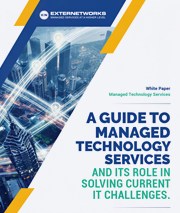
White Paper
A Guide to Managed Technology Services and its Role in Solving Current IT Challenges.
DOWNLOAD NOW!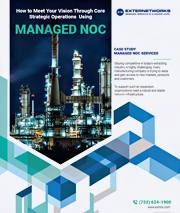
Case Study
How to Meet Your Vision Through Core Strategic Operations Using Managed NOC
DOWNLOAD NOW!You Asked. We Answered.
But if we didn't, just reach out to us and we'll be happy to answer your questions.
Contact UsFAQ's
Network monitoring is the continuous tracking of your IT network’s performance, availability, and security to ensure all devices, applications, and connections operate efficiently. It is important because downtime, latency, or security vulnerabilities can directly impact business productivity, customer experience, and revenue. Proactive monitoring helps businesses detect issues early and prevent costly disruptions.
Network monitoring uses software tools to collect real-time data from routers, switches, firewalls, servers, and endpoints. These tools analyze performance metrics, detect unusual behavior, and trigger alerts when thresholds are exceeded. IT teams can then troubleshoot and resolve issues before they escalate into outages or performance bottlenecks.
Key components include performance, availability, bandwidth, device health, and security monitoring. Critical metrics to track include uptime, latency, packet loss, bandwidth utilization, CPU usage, memory usage, and error rates. Monitoring these metrics ensures your network remains stable, secure, and optimized for business operations.
Monitoring focuses on tracking predefined metrics and alerts to detect known issues. Observability goes deeper by providing contextual insights across logs, metrics, and traces to help teams understand why an issue occurred. While monitoring tells you something is wrong, observability helps you identify the root cause and improve long-term performance.
Best practices include implementing 24/7 monitoring, setting intelligent alert thresholds, conducting regular performance reviews, maintaining proper network documentation, and integrating monitoring with incident response processes. Businesses should also align monitoring metrics with service-level agreements (SLAs) and overall business objectives.
Popular network monitoring tools used by enterprises include SolarWinds, PRTG Network Monitor, Nagios, Zabbix, and ManageEngine OpManager. The right tool depends on your network size, complexity, scalability needs, and integration requirements.
When choosing a solution, evaluate scalability, real-time visibility, automation capabilities, reporting features, integration with existing IT systems, and support services. Consider whether you need on-premises, cloud-based, or hybrid monitoring. A strong solution should align with your business growth plans and security requirements.
Common protocols include SNMP (Simple Network Management Protocol), NetFlow, ICMP, WMI, and Syslog. Each protocol serves a specific purpose, such as device monitoring, traffic analysis, availability checks, or log management. Selecting the right combination ensures comprehensive network visibility.
ExterNetworks delivers 24/7 proactive network monitoring services designed for businesses that require high availability and performance. Our team continuously tracks network health, identifies risks, and resolves issues before they affect operations. With advanced tools, real-time reporting, and experienced engineers, we help organizations reduce downtime, improve security posture, and maintain business continuity.
Network monitoring continuously tracks network performance, availability, bandwidth usage, and traffic to identify issues such as slow connections, packet loss, and downtime. Network management is broader and includes configuring network devices, managing changes, troubleshooting problems, maintaining security, and optimizing overall infrastructure performance.
While network monitoring helps IT teams detect and alert them to potential issues, network management helps them take corrective action and maintain a reliable network. Businesses often use both to improve uptime, strengthen network security, and keep IT operations running smoothly.
Network monitoring software helps businesses track network performance, bandwidth usage, device availability, and potential issues through dashboards, alerts, and reports. Your internal IT team configures the software, investigates alerts, troubleshoots problems, and maintains the network.
An external IT service provider provides managed network monitoring, monitoring your network on your behalf, often 24/7. Depending on the service agreement, it may include proactive issue detection, alert management, incident response, troubleshooting, and SLA-based support.
Businesses with experienced IT teams may prefer network monitoring software for direct control, while organizations that need round-the-clock expertise and reduced internal workloads may benefit from managed network monitoring services.
Managed IT monitoring services help businesses continuously monitor their IT infrastructure, including networks, servers, applications, and devices, to identify performance issues and potential failures. These services use monitoring tools, automated alerts, and expert IT support to detect problems early, reduce downtime, and keep IT operations reliable.
Managed IT monitoring services typically collect real-time performance data, analyze system health, and alert IT professionals to unusual activity or potential issues. Depending on the service agreement, providers may also troubleshoot incidents, resolve technical problems, optimize performance, and provide 24/7 monitoring with SLA-based support. This proactive approach helps businesses improve system availability, strengthen security visibility, and reduce the workload on internal IT teams.
Businesses should monitor key network performance metrics, including bandwidth utilization, latency, packet loss, network availability, jitter, and error rates, to maintain reliable connectivity and spot performance issues. Tracking these metrics helps IT teams detect bottlenecks, troubleshoot connectivity problems, and prevent unexpected downtime.
Other important metrics include device CPU and memory utilization, interface traffic, response times, and network uptime. By setting appropriate monitoring thresholds and configuring real-time alerts, businesses can identify unusual activity, resolve issues proactively, and improve network performance. Regularly reviewing these metrics also helps IT teams plan capacity, optimize infrastructure, and maintain service-level agreement (SLA) targets.
When a network monitoring alert triggers, the monitoring system notifies the IT team of potential issues such as high latency, packet loss, unusual traffic, or device failures. IT professionals investigate the alert, identify the root cause, and assess its impact on network performance. Depending on severity, the team may prioritize and escalate the issue according to predefined alert thresholds and service-level agreements (SLAs).
After identifying the problem, the IT team takes corrective action, such as restarting a device, adjusting network configurations, resolving connectivity issues, or isolating suspicious traffic. Once the issue is resolved, the team verifies network performance, documents the incident, and reviews its cause to prevent recurrence. With 24/7 network monitoring services, businesses can detect issues early, resolve incidents faster, minimize downtime, and maintain reliable network operations.