Smart Hand Services
How Smart Hands Services Scale with Your Global Expansion



Downtime Draining Your Business? Fix It Before It Costs More
Missed alerts turn into outages, outages turn into lost revenue. ExterNetworks Inc. delivers 24/7 NOC & Help Desk support to keep everything running smoothly.
Get 24/7 IT Support NowUnderstanding the Value of Smart Hands Services
In the fast-paced world of IT-driven global businesses, Smart Hands services play a critical role in maintaining the seamless operation of technical infrastructures. These services refer to the on-demand, on-site technical support at data centers and IT facilities. This can include tasks such as hardware installation, troubleshooting network issues, and performing routine maintenance. The significance of Smart Hands services grows as businesses expand globally, offering an accessible solution to the often-complex task of managing IT infrastructure across multiple regions.
Global expansion brings about a range of logistical challenges, particularly in maintaining consistent IT operations across various geographic locations. In this context, Smart Hands services shine as they provide an essential bridge between distant corporate teams and the physical data environments they need to support. By entrusting local experts with the execution of technical tasks, businesses can ensure quick and effective responses to IT needs without geographic constraints. This becomes increasingly vital as organizations aim for uninterrupted service delivery and optimized performance across diverse global markets.
Delivering Consistent and Scalable Support, Worldwide
As businesses grow, the demand for efficient, standardized, and scalable on-site support becomes paramount. Smart Hands services fulfill this need by enabling companies to extend their technical capabilities without having to establish local teams in every region they operate. This is achieved through a network of skilled technicians who are familiar with local infrastructure and can act promptly, eliminating the delays that would otherwise occur when sending specialized staff from headquarters.
Furthermore, Smart Hands services offer a uniform standard of service across all regions, ensuring that, no matter where your business operates, it receives consistent, high-quality support. This standardization is crucial for maintaining brand reputation and operational efficiency, mitigating risks associated with uneven service quality or response times that can occur when managing IT across multiple locales.
Moreover, the scalability of Smart Hands services is a game-changer for businesses that are scaling up quickly. By leveraging these services, companies can rapidly adjust their IT support levels in response to business needs without the lengthy delays of hiring and training new local teams. This flexibility not only enhances the organization’s agility but also reduces overhead costs associated with recruiting and managing full-time employees in foreign markets.
In essence, Smart Hands services offer a strategic advantage for globally expanding businesses. They enable organizations to focus on their core operations and growth strategies, confident that their IT infrastructure is in capable hands around the world. By providing a structure inherently adaptable, Smart Hands services enable businesses to seamlessly navigate the challenges of global expansion while maintaining operational excellence.
Understanding Smart Hands in a Global Context
What Are Smart Hands Services?
In the modern world of technology, where businesses rely heavily on digital infrastructure, the demand for efficient and skilled technical support has never been greater. Enter Smart Hands services, which provide on-site, skilled technical support essential for tasks that necessitate a physical presence in data centers, edge sites, and other critical facilities. These services bridge the gap between remote technical support and hands-on, in-the-field expertise, ensuring that businesses can rely on their digital infrastructures running smoothly and efficiently.
Distinguishing Smart Hands from Traditional Remote Support
Smart Hands services differ significantly from traditional remote support or basic “hands.” While remote support or basic “remote hands” typically address standard tasks such as system reboots and basic monitoring, Smart Hands offer advanced troubleshooting capabilities. For instance, when a server exhibits complex issues that require in-depth evaluation, Smart Hands technicians can perform intricate diagnostics that remote teams may not be able to perform. They can physically assess, inspect, and replace hardware components or cabling, providing a layer of precision and understanding that remote solutions cannot match. This tangible presence is crucial, especially in time-sensitive or high-stakes situations, where speed and accuracy can significantly impact operational continuity.
Beyond troubleshooting, Smart Hands services also extend to comprehensive configuration work. When businesses require precise configuration adjustments — whether setting up network devices or implementing specific security protocols — Smart Hands technicians ensure these adaptations closely align with organizational needs. Their on-site presence empowers them to make necessary alterations with immediacy and relevance, promoting seamless functionality and enhanced performance.
Moreover, Smart Hands technicians are integral to facilitating project work, offering expertise that elevates and accelerates project deployment. From executing complex migrations to upcoming upgrades or new installations, these professionals oversee and streamline processes to reduce potential disruptions. Their adept skills in coordinating and implementing change ensure that business operations transition smoothly from one technological phase to the next with minimal downtime, thereby protecting productivity and innovation.
Overall, Smart Hands services enrich technical support frameworks by providing an essential human component capable of resolving a wide range of complex, nuanced technical challenges. By differentiating themselves from remote support solutions, these services provide businesses with the assurance of dedicated, hands-on assistance in mission-critical environments.
Typical Smart Hands Tasks Across Locations
Smart Hands services play a crucial role in managing and maintaining IT infrastructure across multiple data center locations. These services often encompass a wide array of tasks essential for ensuring seamless operations. Here, we delve into some typical activities performed by Smart Hands technicians:
Key Activities Performed by Smart Hands Technicians
- Hardware Installation, Racking, and Stacking
- Cabling and Device Swaps
- Patching and Power Checks
- Inventory Management and On-Site Troubleshooting
Firstly, one of the primary responsibilities of Smart Hands teams is hardware installation. This involves physically setting up servers, switches, and other networking equipment. Closely related to this is the task of racking and stacking, where technicians ensure that all hardware is securely mounted in server racks. This process requires meticulous attention to detail and proper cable management to maximize data center efficiency.
Additionally, cabling is another critical task. Proper cabling ensures that data flows smoothly throughout the network. Moreover, Smart Hands teams often need to perform device swaps, replacing faulty equipment with functional units. This requires not only technical knowledge but also agility to minimize downtime.
Following cabling, patching tasks are essential for maintaining network security and functionality. Technicians apply software updates and upgrades, ensuring that all systems are performing at their best. Alongside patching, regular power checks are vital. These checks involve monitoring power systems to prevent potential outages or disruptions that could lead to significant data loss or service interruptions.
Moreover, inventory management is a key responsibility. Keeping track of all data center components helps in effective resource planning and reduces unnecessary expenditures. When issues arise, on-site troubleshooting is crucial. Technicians are tasked with diagnosing and resolving technical problems while minimizing impact on operations.
The complexity of these tasks increases exponentially as organizations expand their operations across multiple regions, sites, and providers. As companies expand geographically, differences in regulatory requirements, environmental conditions, and resource availability require Smart Hands teams to adapt their strategies accordingly. Managing these complexities demands greater coordination and expertise.
Furthermore, the diversity of infrastructure and services across locations can present unique challenges. For instance, hardware requirements and configurations may vary widely by region or provider, necessitating tailored solutions. This diversity often results in more intricate cabling and device-swapping processes, while varying levels of software compatibility and update schedules can complicate patching.
Finally, as companies scale, inventory management becomes a monumental task. Ensuring that each location is adequately stocked and that equipment is functional requires sophisticated systems and meticulous oversight. Likewise, power checks may need to be more frequent and comprehensive, as even minor disruptions can have wide-reaching impacts when operations span multiple sites. Therefore, the role of Smart Hands technicians becomes increasingly critical and complex in supporting the global infrastructure of growing organizations.
Why Global Expansion Demands Scalable On-Site Support
Operational Challenges of Going Global
As businesses aspire to expand and establish a global footprint, they face a multitude of operational challenges that must be carefully navigated. Successful globalization requires strategic planning and a deep understanding of various elements that can affect smooth operations across continents. Below, we explore some of these challenges in greater detail.
Navigating Time Zone Differences
One of the most significant operational hurdles that global companies face is managing activities across different time zones. Coordinating meetings and collaborative efforts can become increasingly complex when teams are spread across New York, Tokyo, and every time zone in between. Moreover, customer service operations might suffer delays in response times if not adequately staffed to cover all time zones, thereby impacting customer satisfaction and trust. Businesses must invest in appropriate digital tools and well-trained personnel to ensure seamless communication across geographical boundaries.
Managing Travel Costs
Expanding globally often necessitates regular travel, whether to maintain relationships with international clients, oversee overseas operations, or scout new markets. The costs of frequent travel can quickly accumulate, especially when factoring in flights, accommodations, and other necessary expenses. Companies must strategically plan their travel policies, leveraging technology for virtual meetings wherever possible, without losing the personal touch that is sometimes required in high-stakes negotiations or operations.
Addressing Slow Incident Response
In a global business environment, incidents are bound to happen. However, the speed and efficiency with which these incidents are addressed can make or break the company’s reputation. Slow incident response times can be exacerbated by geographical barriers and disparate working hours across regions. Thus, implementing a robust, global incident management strategy that ensures swift, efficient resolution is essential to maintaining operational integrity and customer satisfaction.
Coordinating Local Vendors
Negotiating and coordinating with local vendors becomes an arduous task when dealing with disparate regulatory, cultural, and business environments across the globe. Differences in language and operational practices can create misunderstandings and inefficiencies. Companies must invest in local expertise or develop strong regional partnerships to manage these relationships and streamline operations effectively.
Risk of Inconsistent Processes and SLA Breaches
The reliance on ad hoc resources and processes tailored to individual regions poses another significant challenge. This approach often leads to a lack of uniformity in business operations, increasing the risk of inconsistent processes and breaches of service-level agreements (SLAs). When regions operate under varying protocols, it becomes difficult to maintain a consistent standard of quality and service. Hence, businesses should aim to establish a cohesive, globally aligned framework that ensures all regions adhere to corporate policies and standards. This alignment minimizes the risk of conflicts and discrepancies that could otherwise jeopardize global operations.
In light of these challenges, businesses looking to go global must adopt proactive strategies, engage in comprehensive planning, and leverage technology to ensure cohesive, consistent operational success worldwide.
The Cost of Building Local IT Teams Everywhere
Financial Implications: Recruiting, Training, Compliance, and Facilities
When businesses decide to expand globally, one of the biggest challenges they face is building robust local IT teams. Each country or region comes with its own set of complexities and costs. Starting with recruitment, hiring skilled IT professionals in each locale can be financially taxing and time-consuming. Companies need to invest in local recruitment networks or platforms, pay agency fees, and allocate resources for intensive interview processes. Moreover, the competition for top talent is fierce, especially in regions with a high demand for tech skills, driving salaries and hiring costs even higher.
Training is another significant expense when setting up local IT teams. After the recruitment phase, newly hired employees must often undergo training programs to align with the company’s operational standards and become familiar with specific tools and systems. This not only requires financial resources but also demands time, potentially delaying project rollouts and affecting overall productivity.
The regulatory environment adds another layer of complexity. Compliance with local labor laws and industry standards is crucial but can be multifaceted and costly. Whether it’s understanding pay structures, adhering to data privacy regulations, or navigating visa requirements, each new country requires a fresh compliance strategy. This often necessitates hiring legal experts or consultants, further increasing costs.
Facilities, such as office space and IT infrastructure, represent the final major expenditure. Securing suitable premises in desirable locations is an ongoing expense that adds up quickly. Additionally, setting up the necessary technology, including servers, networks, and hardware, requires substantial capital investments. Maintenance and upgrades to keep these facilities current can further strain budgets.
Alternatives: On-Demand Smart Hands Capacity
Fortunately, companies can navigate these challenges by adopting alternative strategies, such as using on-demand Smart Hands services. Rather than establishing permanent local IT teams, businesses can deploy skilled IT professionals on an as-needed basis. This strategy offers flexibility and immediacy, as organizations can quickly tap into a pool of experts tailored to specific project requirements without the overhead costs associated with hiring full-time employees.
By leveraging Smart Hands capacity, companies avoid many of the recruitment and training expenses. They can access expertise instantly, bypassing the drawn-out processes of scouting and onboarding suitable candidates. Moreover, this model eliminates the need for continuous investments in employee development programs abroad.
From a compliance perspective, using on-demand services reduces the burden of navigating complex regulatory landscapes. Outsourcing these tasks enables organizations to avoid the complexities of local labor laws and focus on core business objectives. In terms of facilities, businesses need not worry about long-term commitments to office spaces or infrastructure. The temporary nature of these engagements means companies can allocate resources more efficiently and redirect financial savings into strategic growth initiatives.
Overall, while building local IT teams is a traditional approach with its own benefits, the dynamic, cost-effective on-demand Smart Hands model offers a compelling alternative. Organizations that prioritize agility and cost management may find that leveraging on-demand capacity provides them with the global reach they need without the financial strain of establishing a permanent local presence.
How Smart Hands Services Scale with Your Growth
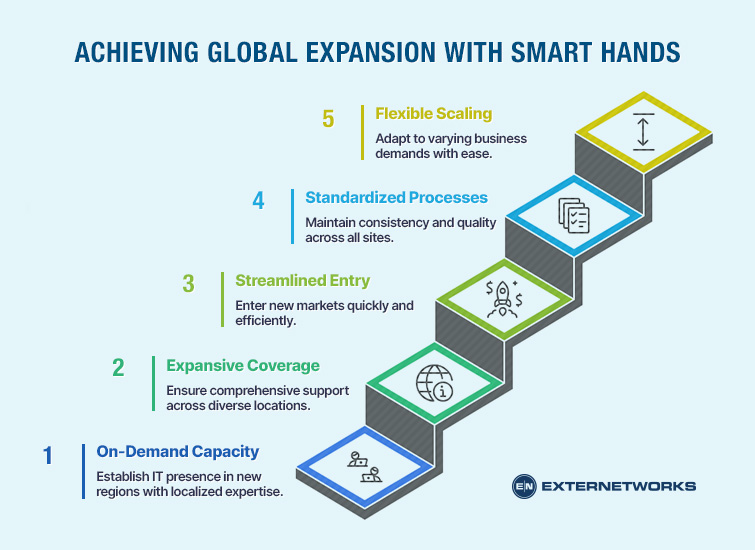
On-Demand Capacity in New Regions
As businesses aim for global expansion, one of the most significant challenges they face is establishing a reliable IT presence in new and often unfamiliar territories. This is where Smart Hands services come into play, offering invaluable on-demand capacity to facilitate seamless operations across borders. These services enable enterprises to swiftly and efficiently establish a presence in new regions by leveraging localized expertise, without the usual hassles of recruitment and training.
Expansive Coverage: Serving Global Needs in Diverse Locations
Smart Hands providers deliver comprehensive coverage that spans major cities, countries, and even remote regions. This extensive network is crucial for businesses looking to set up operations in new areas rapidly. For instance, by having a local team readily available, companies can execute rapid site turn-ups without the logistical challenges typically associated with deploying their IT teams from headquarters. This widespread availability translates into immediate on-the-ground support for installations, troubleshooting, and ongoing maintenance, which is essential for businesses deploying across varied, geographically dispersed locations.
Furthermore, these service providers are familiar with local regulations and operational standards. This knowledge eliminates potential compliance and operational rollout obstacles, allowing businesses to focus on core activities without interruption. Additionally, the ability to integrate seamlessly into existing IT frameworks, regardless of location, provides a foundation of reliability for any expanding enterprise.
Streamlined Market Entry: Speed Without Compromise
The capacity to enter new markets without delay is another area where Smart Hands services excel. When a business decides to venture into a new geographical market, time is often of the essence. However, hiring and training local IT staff can lead to unwelcome delays. Smart Hands services eliminate this bottleneck, providing enterprises with immediate access to skilled IT professionals who understand local market intricacies.
This strategic advantage means that businesses can consistently meet launch deadlines and strategic goals without compromise. It also offers an edge in rapidly evolving markets where first-mover advantages are critical. By reducing the time required for staffing and training, companies not only preserve critical resources but also maintain momentum in their expansion efforts, better positioning themselves for long-term success.
Ultimately, with Smart Hands services, businesses unlock the flexibility to adjust to fluctuating demands and unexpected challenges in new territories. This on-demand capacity is a catalyst for smooth transitions into global markets, ensuring that IT operations align seamlessly with expansion plans. By minimizing disruptions and maximizing efficiency, enterprises can pursue global growth with confidence.
Standardized Processes and SLAs Across Sites
In today’s fast-paced global business environment, maintaining consistency and quality across multiple geographical locations is paramount. Organizations that operate on a worldwide scale understand that to deliver seamless services and products, a unified approach to processes is essential. Standardized processes and Service Level Agreements (SLAs) are the backbone that support this endeavor, ensuring that operations not only meet the expectations of diverse clientele but also adhere to regulatory and quality standards. By implementing these frameworks, businesses can enhance operational efficiency, deliver consistent results, and foster a culture of reliability and trust among their partners and customers.
Crafting Consistency: Playbooks, Checklists, Documentation
At the heart of standardized processes are meticulously crafted playbooks, comprehensive checklists, and detailed documentation. These tools serve as blueprints that guide employees across various sites, ensuring that high-quality work is not dependent on location but is a universal standard. Playbooks are instrumental in outlining procedures and best practices, providing step-by-step instructions for performing tasks effectively and efficiently. As a result, employees are equipped to handle situations with confidence, knowing that they have a reliable guide to follow.
Moreover, checklists complement playbooks as a quick reference tool that ensures every facet of a task is thoroughly covered. Checklists act as a safeguard against human error, helping employees to remain conscientious and consistent in their work. Industries ranging from aviation to healthcare have long understood the power of checklists in maintaining quality and safety standards, and businesses across sectors are now following suit.
Detailed documentation, meanwhile, records the evolution of processes, offering insights that can be vital for training new employees, conducting audits, or improving existing practices. Documentation ensures that knowledge is not lost but built upon, creating a repository of organizational intelligence that supports scalability and adaptability.
SLAs: The Network Keeping the World Connected
Furthermore, the role of global Service Level Agreements, response times, and escalation paths in supporting 24/7 operations cannot be overstated. As businesses strive to provide uninterrupted service across different time zones, SLAs serve as contracts that bind performance expectations to operational deliverables. They stipulate the minimum criteria and expectations for service providers, ensuring that all parties are aligned on what constitutes acceptable performance.
Global SLAs encompass response times that are critical for maintaining customer satisfaction and operational efficiency. They define how swiftly issues must be addressed and resolved, thus preventing minor glitches from escalating into significant problems. This is particularly vital for companies operating around the clock, where downtime can have substantial repercussions.
Moreover, predefined escalation paths within SLAs offer a roadmap for efficiently managing unresolved issues. By clearly outlining the hierarchy and steps for escalation, SLAs ensure that problems are swiftly brought to the attention of individuals with the authority and expertise to address them. Consequently, this approach reduces bottlenecks, accelerates decision-making, and enhances an organization’s overall responsiveness.
In conclusion, standardized processes and SLAs play a critical role in maintaining a consistent level of quality and service worldwide. They not only foster an environment of excellence but also empower businesses to navigate the complexities of global operations with assurance and precision.
Flexible Scaling: From Single Site to Hundreds
Consistent Support from Small Pilots to Global Programs
Flexible scaling enables businesses to efficiently expand their operations from a single site to hundreds without major disruptions. Smart Hands, a service that provides technical support for IT infrastructure, plays a pivotal role in maintaining consistency across different scales. For small pilot projects, Smart Hands provides hands-on support to optimize the initial setup and ensure everything runs smoothly. As businesses aim for regional rollouts, the same framework supports an expanding footprint while delivering reliable, standardized service. Moreover, when it comes to global programs, Smart Hands can seamlessly scale its operations while maintaining the integrity of the original setup across multiple geographic locations. This capability is critical because it enables organizations to focus on strategic growth rather than logistical challenges.
Swift Capacity Increases for Peak Needs
To adapt to varying business demands, the ability to significantly ramp up capacity during peak events is crucial. Large deployments often require an agile, responsive infrastructure that can scale quickly to meet demand. For instance, during seasonal peaks, companies may need additional support for migration or deployment projects. Smart Hands facilitates these expansions by promptly providing skilled technicians and resources, effectively bridging the gap between regular operations and high-demand periods. This responsiveness ensures that businesses remain agile, maintaining service quality during critical times without incurring excessive overheads when demand decreases.
Reducing Complexity in Scaling Processes
Scaling, whether on a small or large scale, can be a complex undertaking for many businesses. The modular nature of Smart Hands services simplifies this complexity by providing a versatile framework adaptable to various stages of growth. Not only does this allow companies to deploy resources exactly where and when they are needed, but it also minimizes potential disruptions associated with scaling. Smart Hands’ standardized approach means organizations can predict outcomes more accurately, which is an invaluable advantage in managing risk. Furthermore, this predictability nurtures confidence among stakeholders, essential for any organization looking to undertake significant expansions with assurance.
Key Use Cases During Global Expansion
New Data Center and Colocation Deployments
Efficient Racking, Stacking, and Cabling with Smart Hands
The implementation of Smart Hands support in new data center and colocation deployments is revolutionizing the industry. This service provides expertise in racking, stacking, and cabling, ensuring that the physical setup of technology infrastructure is efficient and precise. By engaging skilled technicians who are familiar with intricate data center environments, companies can confidently delegate these critical tasks and ensure they are completed swiftly. Smart Hands support mitigates errors that can occur during self-installation, offering peace of mind and high reliability. Furthermore, by involving local experts, organizations can navigate the complex logistics of setting up new facilities more efficiently.
Acceptance Testing Speeds Deployment
Acceptance testing is a crucial phase in any data center deployment, and Smart Hands support plays a pivotal role in this phase as well. These technicians are trained to implement rigorous acceptance testing, ensuring that all equipment and systems function optimally before going live. This step reduces the likelihood of costly downtimes and potential operational hiccups down the line. By using Smart Hands for acceptance testing, companies gain a fresh perspective, often noticing details that internal teams might overlook. The thorough testing process facilitated by Smart Hands helps demonstrate system reliability, adding another layer of confidence to the deployment.
Bridging the Gap for Remote Core Teams
For organizations with remote core teams, Smart Hands’ comprehensive service significantly accelerates time-to-service. With the increasing trend toward decentralized workforces, having reliable on-site support is no longer a luxury but a necessity. By leveraging Smart Hands, companies can maintain progress and productivity even when physical presence is not feasible. This ensures that deployment timelines are adhered to, minimizing any lag that remote coordination might otherwise introduce. Additionally, using Smart Hands allows the core team to focus on strategic tasks while leaving operational logistics to on-the-ground experts, creating a more efficient process overall.
Edge, Retail, and Branch Rollouts
In today’s rapidly evolving technological landscape, edge computing has emerged as a crucial component of infrastructure for retail stores, manufacturing sites, and remote offices. These locations heavily depend on the installation and maintenance of on-site devices to function effectively. Edge computing enables these establishments to process data locally, thereby reducing latency and enabling real-time analytics essential for efficient operations. Retail stores, for instance, utilize edge processing to enhance customer experiences by managing inventory and tracking consumer behavior in real time. Similarly, manufacturing sites rely on edge computing to implement automated systems and monitor equipment performance, promoting more streamlined and effective production processes.
Of equal importance, remote offices benefit significantly from on-site device installations, enabling seamless communication and data management. For example, through tailored edge solutions, these locations can maintain high-speed, reliable connections even with limited infrastructure, allowing employees to remain productive without unnecessary downtimes. To address the challenges of managing advanced technology across multiple sites, companies often turn to Smart Hands services to ensure expert handling of installation and maintenance tasks. This service provides skilled technicians who deliver continuous support and maintenance, thereby ensuring that all edge devices function optimally. Consequently, businesses can focus on their core operations without worrying about technological disruptions at their physical sites.
Moreover, Smart Hands services play a pivotal role in executing consistent multi-site rollouts, spanning diverse geographies, which is crucial for businesses with global operations. This is particularly significant for organizations seeking to expand their presence across countries, as it eliminates the challenges associated with varying local personnel skills and knowledge bases. With a standardized approach, Smart Hands guarantees uniformity and reliability in device deployment, regardless of the location. Furthermore, this service mitigates potential risks and reduces costs associated with hiring and training in-house teams for international rollouts. Such efficiency empowers businesses to enter new markets swiftly, giving them a competitive edge in the global marketplace.
Mergers, Acquisitions, and Consolidations
When companies undergo mergers, acquisitions, or consolidations, integrating IT systems is a central challenge that requires meticulous planning and execution. Such large-scale corporate transformations often require consolidating data centers, a task that demands expertise in managing diverse IT architectures. Smart Hands teams play a crucial role in this process by providing on-site support and technical assistance to ensure seamless data center integration. These professionals assist in migrating workloads efficiently, ensuring minimal disruption to business operations while preserving essential data integrity. Additionally, Smart Hands personnel are instrumental in standardizing infrastructure, thereby optimizing newly combined IT environments for better scalability and performance.
Moreover, these transitions can benefit immensely from a global workforce that is both skilled and pre-vetted. During mergers and acquisitions, companies often face tight deadlines and high stakes, making a reliable team indispensable. Pre-vetted global teams bring not only technical expertise but also valuable multicultural perspectives, which streamline collaboration and improve problem-solving among diverse stakeholders. Such a global workforce facilitates smoother communication and ensures compliance with international regulatory standards throughout the transition period. This approach reduces the risks associated with these corporate events, making the entire process more manageable and efficient.
Furthermore, a pre-vetted global workforce supports quick adaptability in response to unforeseen challenges that may arise during mergers and acquisitions. The ability to draw on a pool of skilled professionals from around the world means a company can rapidly align its human resources with the unique needs of the project. Smart Hands teams, equipped with specialized skills, work tirelessly to maintain operational continuity while navigating the complexities of integrating multiple IT systems. As crucial as technology is in these scenarios, having the right human resources available to manage the technical intricacies is equally vital. Therefore, a strategic approach that leverages a pre-verified global workforce can significantly enhance the success rate of mergers, acquisitions, and consolidations.
Technical and Operational Capabilities That Enable Scale
Global Technician Network and Skill Sets
Diverse Expertise Across Platforms and Industries
In today’s interconnected world, the need for a distributed network of certified technicians has become increasingly vital. These professionals boast extensive experience spanning a variety of vendors, platforms, and industries. This versatility enables them to address and solve a wide range of technical issues, whether dealing with hardware malfunctions or complex software integration. Moreover, being adept in numerous environments fosters innovation and efficiency, allowing businesses to operate smoothly and effectively. As companies expand globally, having skilled technicians readily available in every region ensures that technical support can be delivered promptly without the constraints of geographic boundaries.
Uniform Quality Through Provider Training and Certifications
To ensure a high standard of service, technicians undergo rigorous provider training and obtain certifications that maintain a uniform level of quality worldwide. This structured training is vital as it equips technicians with the latest knowledge and techniques required for troubleshooting and problem-solving. Certifications from leading technology providers such as Cisco, Microsoft, and AWS also serve as a benchmark for proficiency and reliability. Furthermore, continuing education and recertification ensure that technicians remain up to date with the ever-evolving technological landscape. Consequently, businesses can confidently rely on a network of technicians who are not only technically competent but also adherent to global best practices.
The Impact of a Global Network on Business Operations
By accessing a global technician network, businesses can significantly enhance their operations. The immediate benefit is reduced downtime, as local technicians can be deployed quickly to address issues, minimizing potential losses. Additionally, this network supports digital transformation initiatives by providing the necessary expertise to implement new technologies seamlessly. A consistent global quality of service is also advantageous for companies with international branches, ensuring uniformity across all their operations. Thus, a global technician network not only strengthens business resilience but also contributes to sustainable growth in an increasingly digital age.
Tooling, Ticketing, and Remote Collaboration
In modern IT environments, the use of ticketing systems, RMM tools, and customer portals is crucial for maintaining centralized visibility and coordination. Ticketing systems serve as the backbone for issue tracking, allowing teams to log, prioritize, and resolve support requests efficiently. These systems facilitate effective communication between IT professionals and end-users, ensuring that problems are addressed promptly. Furthermore, Remote Monitoring and Management (RMM) tools enhance these capabilities by offering real-time data and analytics on system performance, which can be crucial for proactive issue resolution. Customer portals complement these systems by providing clients with direct access to information regarding their support tickets and system status.
Additionally, remote collaboration is enhanced through standardized procedures that guide on-site Smart Hands staff. These procedures are documented in runbooks that provide detailed instructions for carrying out complex technical tasks. By adhering to these standardized guides, remote engineers can consistently relay precise instructions to on-site teams, reducing the margin for error. This collaboration not only streamlines operations but also ensures that troubleshooting is conducted with uniform precision across geographically diverse locations. The synergy between remote and on-site staff is further strengthened by real-time communication tools that enable instant feedback and adjustments during critical operations.
Moreover, integrating these systems and practices leads to more efficient and transparent service delivery. The centralized data from ticketing systems, coupled with insights from RMM tools, provides a comprehensive overview of the IT landscape, making it easier for decision-makers to identify patterns and potential issues. The result is an organization that is well-equipped to address both everyday and unexpected technical challenges. Additionally, the clear and consistent communication supported by these systems fosters a culture of trust and reliability among stakeholders. This robust framework not only optimizes current workflows but also lays the groundwork for future technological advancements in remote IT collaboration.
Security, Compliance, and Access Management
Background Checks, NDAs, and Access Controls for Sensitive Sites
In today’s global business environment, ensuring security, compliance, and access management becomes crucial, particularly for technicians entering sensitive sites worldwide. First, thorough background checks are essential for verifying the identity and credibility of individuals before granting access to sensitive areas. Moreover, Non-Disclosure Agreements (NDAs) play a pivotal role in protecting confidential information, as they legally bind technicians to keep proprietary data confidential. Consequently, access controls such as biometric verification offer an additional layer of security, ensuring only authorized personnel can enter restricted zones and thereby safeguarding critical assets.
Reducing Compliance Risk through Consistent Security Standards
Moreover, implementing consistent security standards is vital for reducing compliance risks, especially in industries and regions subject to stringent laws. By adhering to standardized security protocols, organizations can ensure uniform protection across multiple geographic locations and minimize the risk of errors or violations. Additionally, establishing security benchmarks simplifies compliance, enabling businesses to efficiently meet legal and regulatory requirements while preventing potential fines or sanctions. Thus, a robust security framework not only fortifies an organization’s defenses but also enhances its ability to operate confidently within regulated environments.
Synergy of Security, Compliance, and Access Management
Ultimately, the synergy among security, compliance, and access management fosters a secure, compliant operational framework, which is indispensable for enterprises operating in sensitive sectors globally. As these elements work together, they contribute to a cohesive strategy that addresses vulnerabilities before they can be exploited. Adopting comprehensive and unified approaches facilitates proactive risk management, effectively balancing operational efficiency with the stringent demands of security and compliance. Consequently, such a well-rounded strategy empowers organizations to navigate complex regulatory landscapes while maintaining high standards of accountability and privacy protection.
Business Benefits of Smart Hands for Global Expansion
Reduced Time-to-Market
Expedited Provisioning and Launch
Faster provisioning significantly reduces time-to-market by enabling companies to set up their infrastructure quickly and efficiently. This rapid setup is crucial for launching services in new regions, enabling businesses to respond quickly to local demand and adapt to market conditions. Moreover, expedited provisioning enables seamless expansion, minimizing delays and ensuring a smooth transition into new territories.
Streamlined Implementation Process
The implementation phase is another critical aspect where time-saving measures can accelerate market entry. By streamlining this process with advanced technologies and methodologies, companies can quickly adapt their products or services to meet regional standards and consumer preferences. Consequently, the reduced implementation time not only brings services to market faster but also helps maintain a high level of quality, enabling companies to establish a strong foothold in new regions.
Efficient Incident Management
Efficient incident handling is vital for maintaining operational continuity during market expansion. By swiftly addressing and resolving issues, companies can prevent service deployment delays and ensure customer satisfaction. Thus, effective incident management supports not only a faster time-to-market but also builds resilience, giving businesses a competitive edge and facilitating revenue acceleration as they deliver reliable services to new customers.
Lower Operational and Travel Costs
With the integration of Smart Hands services, companies are experiencing a significant reduction in operational and reducing IT travel costs. Smart Hands cuts travel by eliminating frequent engineer visits to remote sites, thus saving valuable resources. By relying on local expertise, businesses no longer need to dispatch engineers for routine maintenance or unexpected troubleshooting, thereby saving substantial travel expenses. This streamlined approach not only reduces costs but also minimizes the carbon footprint associated with frequent air and road travel.
Moreover, adopting Smart Hands contributes to cost-effective business processes through predictable pricing models. These models, including pay-as-you-go and project-based engagements, offer enterprises the flexibility to manage their budgets efficiently. As a result, businesses can forecast expenses more accurately, aligning costs with their operational needs without worrying about unexpected fees. This financial predictability allows for better long-term planning and investment in other vital areas of the business, fostering growth and innovation.
Furthermore, reduced reliance on in-house engineer visits enables quicker response times to address site issues. With on-demand local technicians, critical problems can be resolved promptly, enhancing operational efficiency. This speed translates to less downtime and increased productivity, further underscoring the economic advantages of Smart Hands services. Consequently, this combination of reduced travel costs and enhanced service delivery provides companies with a competitive edge in today’s fast-paced market.
Improved Uptime and Customer Experience
Rapid Response and Reduced Downtime
The ability to maintain high uptime for globally distributed services hinges on a rapid physical response to technical issues. When problems arise, quickly deploying solutions can significantly reduce downtime, ensuring that services remain available to users around the clock. For instance, advanced monitoring systems enable technical teams to swiftly pinpoint geographic disruptions and address them before they affect the global user base. As a result, service providers that prioritize efficient problem resolution can enhance reliability and performance, fostering greater trust among their customers. This proactive approach not only mitigates immediate issues but also minimizes the potential ripple effects of prolonged service interruptions.
High Availability, Enhanced Experience
Moreover, achieving high availability is crucial for delivering an exceptional customer experience, as consistent service availability influences customer perceptions. When services run smoothly without unexpected interruptions, users enjoy a smoother experience, which often leads to greater satisfaction and loyalty. For businesses, this translates into stronger Service Level Agreements (SLAs), which are crucial in setting clear expectations and commitments between service providers and their customers. Consequently, robust SLAs backed by reliable service increase customers’ confidence in the service provider, ultimately benefiting both parties. Furthermore, maintaining high availability is not just about preventing downtime; it is about fostering an environment where users feel valued and assured.
Trust Through Resiliency and Proactivity
A proactive approach to service management fosters reliability and is driven by strategies that emphasize resilience and foresight. By implementing architecture designs that anticipate potential failures and incorporating redundancy into systems, service providers can achieve optimal uptime. This strategic foresight contributes to a trustworthy service environment where customers feel secure, knowing that potential disruptions are actively managed. Additionally, ongoing investments in technology and infrastructure improvements reinforce this trust, equipping service providers with the resilience needed to handle unforeseen challenges. Long-term relationships built on trust and reliability often evolve into partnerships, paving the way for mutual growth and innovation in service delivery. Overall, a commitment to maintaining high uptime is an investment in customer loyalty and future success.
Choosing the Right Smart Hands Partner for Global Scale
Must-Have Global Capabilities
Extensive Geographic Reach
For any organization aiming to compete globally, an extensive geographic reach is imperative. This capability enables a company to effectively serve customers and operate across multiple regions, breaking down geographical barriers. Companies must strategically position themselves in key markets worldwide to stay ahead, leveraging local resources and insights to customize their approaches.
Around-the-Clock Service and Multi-Vendor Expertise
Equally important is the ability to provide 24/7 service, as business in a global economy transcends time zones, necessitating constant availability. Coupled with this is multi-vendor expertise, which enables organizations to offer a wide array of solutions tailored to diverse client needs. Having a team with cross-vendor capabilities allows a company to implement and manage various technologies, thereby enhancing its competitive edge.
Standardized Processes and Strong Governance
On another front, standardized processes are crucial for maintaining consistency across global operations. These practices ensure seamless integration and delivery while reducing the risk of errors. Moreover, strong governance frameworks must be in place to comply with international regulations, reinforced by robust multilingual support and an in-depth understanding of local regulatory environments to minimize legal risks and foster trustful relations with regional partners.
Questions to Ask Potential Providers
When evaluating potential providers, it’s crucial to ask about Service Level Agreements (SLAs) to ensure they meet your standards. Delve into specifics by asking for documentation that outlines response times, uptime guarantees, and penalties for service failures. Additionally, inquire about the terms of their escalation paths to understand how issues beyond standard support are handled, and whether there’s a direct communication channel with higher-level managers during critical incidents.
Another aspect to consider is the provider’s certifications and security credentials, which can indicate their commitment to maintaining high operational standards. Questions about industry-specific certifications, such as ISO 27001 or SOC 2, can shed light on their compliance with top-tier security protocols. Furthermore, discuss their data encryption and backup methods to assess how well they can protect your information from breaches or loss.
For seamless operations, it’s also vital to address how the provider’s services will integrate with your existing IT Service Management (ITSM), monitoring, and change management tools. Ask whether they offer APIs or out-of-the-box solutions compatible with your systems to facilitate easier integration. Moreover, explore their reporting capabilities and frequency to receive timely insights and notifications that help you monitor performance and address issues proactively.
Evaluating Fit for Your Expansion Roadmap
Mapping Provider Coverage to Your Planned Regions and Infrastructure Needs
When expanding into new markets, it’s crucial to align your provider coverage with the specific regions you’re targeting. Each area may come with unique challenges, including varying regulatory landscapes and consumer preferences. Thus, mapping the provider’s coverage in these regions can help you understand the proximity to core infrastructure and potential logistical challenges. Additionally, taking timelines into account ensures that your expansion happens smoothly and on schedule. By aligning your technology stack with service provider capabilities, you create a seamless integration that supports robust growth. This approach ensures your resources are used optimally and can accelerate the process.
Testing Smart Hands in Select Core Markets
To ensure a smoother global rollout, consider piloting Smart Hands services in one or two strategic markets initially. Beginning with a focused pilot allows your company to identify any potential issues and refine processes before scaling globally. As a result, you gain valuable insights while minimizing risk, ensuring that every aspect of your service is prepared for broader implementation. Furthermore, validating your Smart Hands services in key markets offers an opportunity to gather feedback and make necessary adjustments tailored to regional needs. This trial not only improves operational efficiency but also enhances customer experience, leading to a more successful expansion strategy.
Iterative Assessment for Long-Term Success
Continuous evaluation of your expansion roadmap helps determine if strategic goals align with evolving market dynamics. Regularly revisiting your original plans against the backdrop of economic changes and technological advancements ensures long-term sustainability. By maintaining a flexible yet structured roadmap, your organization can swiftly adapt to new opportunities and challenges. Moreover, leveraging ongoing data analysis supports more informed decision-making, promoting agile responses to unforeseen market trends. As the landscape shifts, the ability to pivot and recalibrate processes ensures enduring success and growth, making adaptability a cornerstone of your expansion strategy. Overall, these practices form a resilient blueprint for scaling effectively across global markets.
Implementation Roadmap: Scaling Smart Hands with Your Growth
Phase 1 – Assess and Plan
Evaluating Present On-Site Support Deficiencies
Before embarking on any new initiative, it’s crucial to identify the current gaps in on-site support. This evaluation involves examining various facets, such as resource availability, process efficiency, and personnel expertise. Understanding these deficiencies not only helps in optimizing existing protocols but also paves the way for implementing innovative solutions. Moreover, analyzing incident patterns provides key insights into recurring issues, offering a foundation for developing strategies to mitigate them effectively.
Analyzing Incident Trends and Formulating Rollout Strategies
Alongside assessing support gaps, it is equally vital to scrutinize incident patterns over time. By doing so, organizations can pinpoint common issues and devise proactive measures to address them, minimizing the likelihood of recurrence. Furthermore, thoughtful rollout planning is essential in fostering seamless transitions and ensuring new processes or technologies are integrated smoothly. This requires a holistic understanding of team capabilities and resource allocation, ultimately leading to a more streamlined implementation process.
Establishing Key Performance Indicators
The success of any initiative can be substantially enhanced by defining robust Key Performance Indicators (KPIs). Metrics such as response time, resolution time, and deployment velocity serve as benchmarks, allowing organizations to measure efficacy and identify areas for improvement. These KPIs provide a clear framework for continuous assessment and optimization of on-site support operations, which, in turn, facilitates quicker adjustments and enhancements. Additionally, well-defined KPIs help align team efforts with organizational goals, fostering a focus on strategic objectives and long-term success.
Phase 2 – Pilot and Standardize
Selecting Initial Sites for Process Refinement
During Phase 2, the project team begins by implementing pilot programs in carefully selected sites or regions. This limited rollout is crucial for testing and refining processes before a wide-scale launch. For example, by selecting sites with varying characteristics, the team can better understand how the program might perform under different conditions, helping to identify potential challenges and opportunities for process optimization. By focusing on a manageable number of locations, the team ensures resources are allocated efficiently and that any necessary adjustments are more easily implemented. Lessons learned from these pilot sites can be applied to improve the overall program before it is standardized and scaled.
Synchronizing Runbooks, Communication Protocols, and Reporting
In addition to managing the pilot rollout, Phase 2 necessitates aligning operational documents and protocols across all participating teams. Runbooks, communication protocols, and reporting methods must all be synchronized to ensure seamless workflow and information exchange. For instance, establishing standardized runbooks provides a consistent guide for operational processes, which is vital for troubleshooting and ensures all parties are on the same page. Meanwhile, clear communication protocols facilitate effective collaboration among internal teams, preventing misunderstandings and promoting transparency. Similarly, adopting standardized reporting structures helps streamline performance monitoring and decision-making.
Collaborating with Internal Teams for Effective Standardization
Moreover, successful standardization during Phase 2 requires active collaboration with internal teams to integrate and adapt these frameworks to the organization’s needs. This collaboration allows for customization of standards to align with specific goals and operational contexts. As teams work together to resolve conflicts and harmonize procedures, they build a more cohesive and efficient operational environment. Furthermore, regular feedback loops can be established to continuously adapt and improve the aligned frameworks as the program evolves. Ultimately, such thorough integration promotes a culture of continuous improvement, paving the way for a successful transition to larger-scale deployments.
Phase 3 – Scale and Optimize
Expanding Coverage to New Regions
As businesses expand, it’s crucial to adopt a scalable model that can be replicated across regions. Establishing a repeatable framework allows organizations to enter new markets and nations while maintaining consistency and efficiency. This model must consider cultural nuances, local regulations, and logistical challenges to ensure seamless transitions and expansions. By investing in a robust framework, companies can ensure that expansion efforts are sustainable and effective across diverse geographic landscapes.
Harnessing the Power of Analytics for Continuous Improvement
To remain competitive, organizations must engage in continuous improvement, which is most effectively achieved through data-driven analytics. With advanced analytics, companies can monitor performance metrics and identify areas for enhancement, allowing them to make informed decisions. Regularly gathering and analyzing customer feedback also provides insights that improve service levels and product offerings, thereby fostering customer satisfaction and loyalty. Moreover, businesses should not underestimate the value of periodic reviews of service-level agreements (SLAs) and scope documents to ensure alignment with evolving goals and expectations.
Optimizing Operations Through Feedback and Review
Another crucial aspect of scaling and optimizing involves integrating regular reviews and feedback into the operation. Periodic evaluations of SLAs and service scope ensure that both internal teams and external partnerships stay aligned with the company’s vision and deliverables. Additionally, incorporating feedback loops from customers, partners, and employees creates an environment that continually adjusts and improves processes. This practice not only optimizes current operations but also prepares the organization to adapt swiftly to market changes, ensuring long-term growth and resilience.
Future Trends: Smart Hands in a Hyper-Distributed World
Edge Computing, IoT, and Distributed Clouds
Increasing Demand for Local Smart Hands with Rising Edge Sites and IoT Deployments
As the number of edge computing sites and Internet of Things (IoT) deployments grows, demand for local Smart Hands support is increasing. This need arises because edge sites bring computational power closer to the source of data—often in remote locations where technical expertise is scarce. Moreover, IoT deployments, which usually involve numerous interconnected devices, require prompt, localized attention to ensure seamless operation and minimize downtime. Consequently, it has become increasingly crucial to have skilled technicians available on-site to manage, troubleshoot, and repair these complex systems.
Evolution of Providers in Supporting Micro Data Centers and Pop-up Sites
To keep pace with the expanding landscape of distributed computing, service providers are evolving their offerings to support micro data centers and pop-up sites. These smaller-scale data centers are strategically located and quickly deployable, catering to industry-specific needs, such as retail analytics or real-time healthcare monitoring. Furthermore, innovations such as modular deployments and scalable infrastructure enable providers to offer tailored solutions, ensuring greater flexibility and more efficient resource management, particularly in unpredictable market environments.
Adapting Infrastructure for Industry-specific Locations
Industries with unique requirements are driving the push for customized edge infrastructure solutions. For example, sectors such as manufacturing or agriculture benefit from dedicated edge computing setups that offer real-time data processing and specific performance metrics. This enables industry players to harness analytics and data insights effectively, thereby optimizing operations and reducing latency. As a result, the integration of edge computing in various industry-specific locations also fosters enhanced collaboration and data sharing, making it an indispensable aspect of modern digital transformation strategies.
Automation and Augmented Support
Incorporating automation, remote diagnostics, and augmented reality (AR)-guided workflows significantly enhances the efficiency of Smart Hands. Automation streamlines repetitive tasks, allowing technicians to focus on complex issues that require human intervention. With remote diagnostics, issues can be identified and assessed without needing on-site presence, enabling rapid response and minimizing downtime. Furthermore, AR-guided workflows provide step-by-step visual instructions, empowering technicians to resolve issues accurately and swiftly. Together, these technologies transform traditional operational methods, making them more dynamic and responsive to evolving business needs.
This combination of automation and advanced support systems enables a small global core team to manage a vast physical presence across multiple locations. Automation reduces the workload by handling routine tasks, thus freeing up human resources for strategic decision-making and problem-solving. Remote diagnostics enable the core team to oversee and control processes globally, providing them with real-time data and insights to address issues quickly. As a result, businesses can maintain a lean workforce without compromising on service quality or operational efficiency.
Moreover, AR-guided workflows bridge the gap between centralized management and on-site requirements, providing immersive, interactive solutions. Technicians equipped with AR devices can perform complex repairs with the support of remote experts, creating a seamless collaboration between the core team and field workers. Consequently, integrating these technologies not only optimizes resource allocation but also enhances the workforce’s skill set. Hence, businesses adopting such tech-driven approaches can gain a competitive edge by delivering better services with fewer resources.
Conclusion: Turning Smart Hands into a Global Growth Lever
Smart Hands as a Strategic Enabler for Global Expansion
Smart Hands services have evolved beyond mere tactical support, becoming pivotal strategic enablers for businesses eyeing global expansion. By offering on-site technical assistance, troubleshooting, and installations, these services empower organizations to navigate the complexities of cross-border operations. Smart Hands is instrumental in bridging the gap between local IT capabilities and international aspirations, providing the necessary scaffolding for sustainable growth. As companies expand their footprints across diverse markets, Smart Hands ensures that technological infrastructure aligns with the overarching corporate objectives, thereby catalyzing seamless integration on a global scale.
Aligning Smart Hands with International Growth and IT Strategy
To truly unlock the potential of Smart Hands, it is essential to align these services with a company’s international growth roadmap and IT strategy. By partnering with specialized providers like extnoc.com, organizations can tailor Smart Hands solutions to meet their specific needs and objectives. Extnoc.com offers expertise in crafting bespoke solutions that dovetail with existing strategies, ensuring that businesses harness the full spectrum of Smart Hands capabilities. Furthermore, this partnership means that companies can rely on a consistent quality of service that supports their global initiatives, minimizing the risks associated with expansion.
Exploring Opportunities for Enhanced Global Operations
Readers are invited to delve deeper into the opportunities that arise from integrating Smart Hands into their operational framework. Collaborating with a provider such as ExterNetworks offers an avenue to explore how Smart Hands can align with and enhance existing global strategies. With expertise in the nuances of international markets, extnoc.com empowers businesses not only to adapt but to thrive in new territories. As businesses navigate the global landscape, Smart Hands becomes a vital component of their strategic arsenal, providing the flexibility and expertise needed to maintain momentum and capitalize on emerging opportunities.
Related on ExterNetworks Right Now!

Crucial Red Flags: Don’t Hire an IT…
Written By Allan Stuke

Why Smart Hands is the Secret to…
Written By Allan Stuke

Most Recent Posts