Editor’s Note: Ryuk ransomware is a highly targeted, destructive strain known for demanding high ransoms. The article explains infection vectors, payload mechanisms, and containment tactics. Organizations aiming to ... Read More
Missed alerts turn into outages, outages turn into lost revenue. ExterNetworks Inc. delivers 24/7 NOC & Help Desk support to keep everything running smoothly.
Get 24/7 IT Support NowIn today’s digital age, cyber threats are becoming increasingly sophisticated and dangerous. One such threat that has gained notoriety is the Ryuk ransomware. But what exactly is Ryuk ransomware, and why is it causing so much havoc in the cybersecurity world?
Ransomware attacks have become a major concern for individuals and organizations alike. Ryuk ransomware, in particular, has emerged as one of the most impactful and lucrative ransomware strains in recent years. It has targeted various industries, including healthcare, finance, and government sectors, causing significant financial losses and disruption.
Understanding how Ryuk ransomware works is crucial to protecting yourself and your organization from this malware.
In this article, we will delve into the intricacies of Ryuk ransomware, its origins, its devastating effects, and most importantly, how to prevent and mitigate the risks associated with it.
Ransomware is an increasingly common type of malware that malicious actors use to hold people’s systems and/or data hostage for payment. One example is Ryuk, a widely used ransomware strain for targeted attacks against larger organizations because it can encrypt essential files into one large ransom package. It usually comes with a hefty ransom demand of hundreds of thousands of US dollars.
Technically, Ryuk uses cryptographic algorithms such as AES-256 and RSA-2048 to encrypt the victim’s data, leaving them with little choice but to pay. Since many individuals and organizations often choose not to risk paying the ransom without rebuilding their networks from scratch, it adds credence to why victims should take preventive measures such as backing up all their data regularly in different locations while also keeping strong password policies and updating security patches in place to minimize potential damage from such infections.
Ryuk encrypts files on infected systems. It is human-operated, making autonomous detection difficult. The attackers behind Ryuk operate in ways that appear normal. Ryuk uses a phishing campaign, sending malware through emails, links, and attachments. Victims can also unknowingly download malware while browsing or connecting to WiFi.
This article explores the inner workings of Ryuk ransomware, shedding light on its deployment methods, encryption techniques, and the evolving tactics used by the cybercriminal groups behind it.
Ryuk ransomware is known for its targeted approach and sophisticated infection methods. This malicious software typically enters a network through spear-phishing emails and compromised credentials used for remote access.
Spear phishing emails are a common initial infection vector used by the threat actors behind Ryuk ransomware. These spam emails are carefully crafted to trick users into clicking on malicious links or attachments, which then execute the ransomware payload. Compromised remote-access credentials can also be used to gain unauthorized entry into a network and deploy the ransomware.
This ransomware variant utilizes a combination of robust encryption algorithms, including AES-256 and RSA 4096, to encrypt the targeted files.
The AES-256 encryption algorithm, widely regarded as highly secure, encrypts the files with a strong cipher. Meanwhile, RSA 4096 encrypts the AES-256 key itself, adding an extra layer of security.
To maintain system stability and prevent critical system files from being encrypted, Ryuk follows exclusion rules. These rules exclude certain file types and folders from encryption. Ryuk often skips file types such as .dll, .exe, .sys, and .lnk to avoid disrupting the operating system. By excluding these file types, Ryuk keeps the infected system’s core functionality intact, allowing the ransomware to continue its malicious activities while leaving essential system files untouched.
Ryuk also whitelists specific folder names, ensuring that files within these folders are not encrypted. These whitelisted folders often include system directories, such as Windows, Program Files, and Program Files (x86), as well as popular web browser directories. By sparing these folders from encryption, Ryuk reduces the risk of system instability and lets the infected system function to some extent, facilitating communication and ransom payment between the threat actors and victims.
Payment for Ryuk ransomware is a critical step in the recovery process for organizations affected by this malicious software. The threat actors behind Ryuk typically demand hefty ransoms to decrypt the encrypted files and restore access to the victim’s network.
Ransom demands can vary based on factors such as the size and value of the targeted company. Larger organizations with more critical assets and significant financial resources may face higher ransom demands. This is because threat actors know these companies are more likely to pay a substantial ransom.
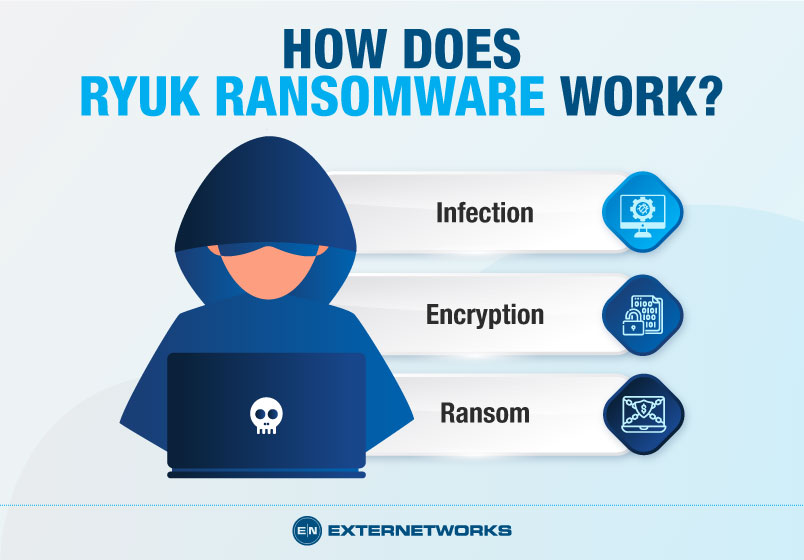
If your device is infected with Ryuk ransomware, act immediately to remove the malware and protect your files. Follow these steps to remove Ryuk ransomware from your infected device:
Isolate the infected device: Disconnect it from any network drives, external hard drives, and cloud storage accounts. This will prevent the ransomware from spreading to other devices and networks.
Disconnect from the internet: Disable your device’s internet connection to prevent any further communication between the ransomware and its command-and-control servers.
Run an antivirus scan: Use reputable antivirus software to scan your device and detect the Ryuk ransomware. The antivirus program will identify and remove the malicious files associated with the ransomware.
Remove all traces of the ransomware: After the antivirus scan completes, manually delete any suspicious files or programs that may still be on your device. Be cautious, and delete only ransomware-related files.
Seek professional assistance: If you’re unsure about the removal process or if the ransomware has caused significant damage, consider engaging experienced IT professionals. They can provide expert guidance and help remove Ryuk ransomware effectively.
Organizations recovering from a Ryuk ransomware attack should prioritize restoring data from clean, verified backups rather than immediately reconnecting compromised systems. Begin recovery after the security team contains the attack, investigates the scope of the compromise, and confirms the environment is safe to rebuild.
Key steps to restore encrypted files after a Ryuk attack:
Organizations should document recovery actions and test their disaster recovery procedures after the incident. If clean backups are unavailable, consult qualified incident-response specialists to assess recovery options. Paying the ransom does not guarantee successful decryption or prevent another attack.
Managed security services and 24/7 network monitoring help businesses detect and respond to Ryuk ransomware threats before they cause widespread damage. Continuous monitoring lets security teams spot unusual login attempts, suspicious endpoint activity, abnormal network traffic, and unexpected changes to security tools. Early detection helps organizations investigate potential attacks and shorten the time from initial compromise to incident response.
Alert triage and incident escalation help security teams prioritize critical threats and respond quickly. Managed security providers analyze alerts to distinguish potential ransomware activity from routine system events, investigate suspicious behavior, and notify the appropriate IT and security personnel. Clear escalation procedures ensure that high-risk incidents receive immediate attention, reducing delays in containment and decision-making.
Endpoint investigation and coordinated incident response help limit Ryuk ransomware’s spread across business networks. Security teams can examine endpoint alerts, authentication logs, running processes, and network connections to identify affected systems and potential attack paths. They can then isolate compromised devices, restrict unauthorized access, protect unaffected systems, and coordinate recovery activities using verified backups. Continuous monitoring after recovery also helps detect reinfection attempts and confirm that security controls are functioning effectively.
Restoring business operations after a Ryuk ransomware attack requires careful backup assessment to avoid bringing compromised data or malicious files back into the network. Enterprises should establish a verification process to confirm backup integrity, protect recovery copies, and ensure systems are ready for secure restoration.
A top priority is inspecting and protecting backup copies before use. IT teams should isolate backups from affected systems, scan files with up-to-date security tools, and verify data integrity using checksums or, where available, backup validation logs. These measures help identify suspicious content, corrupted files, and incomplete recovery points.
Once backups pass the initial checks, administrators should test them in a clean, isolated recovery environment. They should restore selected systems, verify application functionality and data accuracy, apply security patches, and reset compromised credentials. This controlled approach helps identify problems before restored systems reconnect to the production network.
After testing, enterprises should restore critical services in stages and monitor them for suspicious processes, unauthorized access, and unusual network activity. Documenting verification results and maintaining continuous security monitoring can help prevent reinfection and support a more reliable recovery from a Ryuk ransomware incident.
Enterprise ransomware families use different methods to access business networks, encrypt files, steal sensitive information, and disrupt operations. Some focus primarily on data encryption, while others combine encryption with data theft and extortion. Understanding these differences helps organizations strengthen their cybersecurity defenses.
Common Enterprise Ransomware Families
Organizations should implement multifactor authentication, patch vulnerabilities regularly, segment business networks, and deploy endpoint detection and response (EDR) tools. Continuous monitoring can identify suspicious activity, while isolated, regularly tested backups support recovery. Employee awareness training and a documented incident response plan further help businesses reduce the impact of ransomware attacks.
Organizations recovering from a Ryuk ransomware attack should prioritize restoring data from clean, verified backups rather than immediately reconnecting compromised systems. Begin recovery after the security team contains the attack, investigates the scope of the compromise, and confirms the environment is safe to rebuild.
Key steps to restore encrypted files after a Ryuk attack:
Organizations should document recovery actions and test their disaster recovery procedures after the incident. If clean backups are unavailable, consult qualified incident-response specialists to assess recovery options. Paying the ransom does not guarantee successful decryption or prevent another attack.
Managed security services and 24/7 network monitoring help businesses detect and respond to Ryuk ransomware threats before they cause widespread damage. Continuous monitoring lets security teams spot unusual login attempts, suspicious endpoint activity, abnormal network traffic, and unexpected changes to security tools. Early detection helps organizations investigate potential attacks and shorten the time from initial compromise to incident response.
Alert triage and incident escalation help security teams prioritize critical threats and respond quickly. Managed security providers analyze alerts to distinguish potential ransomware activity from routine system events, investigate suspicious behavior, and notify the appropriate IT and security personnel. Clear escalation procedures ensure that high-risk incidents receive immediate attention, reducing delays in containment and decision-making.
Endpoint investigation and coordinated incident response help limit Ryuk ransomware’s spread across business networks. Security teams can examine endpoint alerts, authentication logs, running processes, and network connections to identify affected systems and potential attack paths. They can then isolate compromised devices, restrict unauthorized access, protect unaffected systems, and coordinate recovery activities using verified backups. Continuous monitoring after recovery also helps detect reinfection attempts and confirm that security controls are functioning effectively.
Restoring business operations after a Ryuk ransomware attack requires careful backup assessment to avoid bringing compromised data or malicious files back into the network. Enterprises should establish a verification process to confirm backup integrity, protect recovery copies, and ensure systems are ready for secure restoration.
A top priority is inspecting and protecting backup copies before use. IT teams should isolate backups from affected systems, scan files with up-to-date security tools, and verify data integrity using checksums or, where available, backup validation logs. These measures help identify suspicious content, corrupted files, and incomplete recovery points.
Once backups pass the initial checks, administrators should test them in a clean, isolated recovery environment. They should restore selected systems, verify application functionality and data accuracy, apply security patches, and reset compromised credentials. This controlled approach helps identify problems before restored systems reconnect to the production network.
After testing, enterprises should restore critical services in stages and monitor them for suspicious processes, unauthorized access, and unusual network activity. Documenting verification results and maintaining continuous security monitoring can help prevent reinfection and support a more reliable recovery from a Ryuk ransomware incident.
Enterprise ransomware families use different methods to access business networks, encrypt files, steal sensitive information, and disrupt operations. Some focus primarily on data encryption, while others combine encryption with data theft and extortion. Understanding these differences helps organizations strengthen their cybersecurity defenses.
Common Enterprise Ransomware Families
Organizations should implement multifactor authentication, patch vulnerabilities regularly, segment business networks, and deploy endpoint detection and response (EDR) tools. Continuous monitoring can identify suspicious activity, while isolated, regularly tested backups support recovery. Employee awareness training and a documented incident response plan further help businesses reduce the impact of ransomware attacks.
Its technical analysis reveals several key features that make it a formidable threat. It employs a three-tier trust encryption model, which ensures that files are locked securely and remain inaccessible to the victim. This model encrypts the victim’s files with a unique encryption key, then encrypts the key itself with another key.
Finally, the second key is encrypted with a public key that only the attackers possess. This multilayered encryption makes it extremely difficult to reverse engineer, bypass, or decrypt the files without the attacker’s private key.
To maintain anonymity and evade detection, the attackers behind Ryuk ransomware utilize encrypted email services. They change the email addresses associated with each malware attack, making it challenging for law enforcement and cybersecurity researchers to track them down. These continuous adaptation and evasion tactics contribute to the longevity and success of Ryuk ransomware campaigns.
In this analysis, we will examine the behavioral patterns exhibited by Ryuk ransomware, shedding light on its encryption methods, email communication strategies, and adaptation techniques. Understanding the intricacies of Ryuk’s operations is essential in developing effective countermeasures and mitigating the impact of this persistent and evolving threat.
The Ryuk ransomware executes through a malware dropper, which carries out the initial actions of the attack. The dropper identifies the victim’s operating system and then chooses the appropriate folder to drop the Ryuk binary, the main ransomware executable.
The malware dropper performs several actions to ensure the ransomware executes successfully. It checks for specific files or registry keys to determine whether it has already infected the target system. This helps avoid duplication and detection by security measures.
To maintain persistence, the dropper creates a failsafe mechanism in case the file creation process fails. This mechanism lets the malware restore itself if it is deleted or removed during cleanup. This ensures the Ryuk binary continues to operate even if it initially cannot execute due to system or security restrictions.
The Ryuk binary encrypts files on the infected system and creates a ransom note demanding a hefty payment to release them. This ransomware targets critical systems and assets, encrypts various file types, and affects network drives.
Persistence, privilege escalation, and process enumeration are key techniques Ryuk uses to operate effectively on an infected system.
To achieve persistence, Ryuk modifies the Windows Registry by overwriting the “Run” key and setting a new value that points to the malware’s executable. This ensures Ryuk launches automatically at startup, even after a reboot or shutdown. This enables the ransomware to continue its malicious activities without the user’s knowledge.
Privilege escalation is a key tactic Ryuk uses to gain higher permissions and access critical system resources. Ryuk achieves privilege escalation by targeting the SeDebugPrivilege argument, which controls a process’s debug privilege in Windows.
To modify the SeDebugPrivilege argument, Ryuk uses the AdjustTokenPrivileges function, a Windows API that lets a process adjust the privileges in its token. By calling this function, Ryuk can enable or disable the debug privilege, effectively elevating its privileges within the system.
By obtaining elevated privileges through privilege escalation, Ryuk can bypass restrictions and access critical resources that would otherwise be restricted. This enables the ransomware to carry out its malicious activities, such as encrypting files and executing commands, with significant control and impact.
Beyond privilege escalation, Ryuk also uses other techniques to maintain persistence on an infected system. One technique involves modifying the Windows Registry’s “Run” key. By overwriting the existing value with its own, Ryuk ensures it launches automatically at startup, even after reboots or shutdowns. This persistence lets Ryuk continue its malicious activities covertly, making it harder to detect and remediate.
Process enumeration is an important phase in Ryuk ransomware operations, where it identifies and gathers information about running processes on an infected system.
During process enumeration, Ryuk creates an array of structures containing entries related to each process’s identity. These structures typically include process IDs, handles, thread counts, and other context-specific details. Ryuk then assembles these structures into a list, which serves as a reference for subsequent code injection.
Ryuk focuses on injecting its malicious code into user-level processes by selective process enumeration, allowing it to perform actions such as file encryption and command execution without disrupting critical system processes. This methodology helps ensure that the ransomware can continue its activities with minimal detection and interference.
Code injection is a dangerous form of malware that lets malicious code run in a process’ memory.
Ryuk ransomware first used this technique in 2018. It uses a function called VirtualAllocEx() to target a predefined space in the process memory. It then uses another function to write its code into that allocated space. To complete the malicious code injection, Ryuk then uses CreateRemoteThread() as an argument, creating and executing a separate thread within the injected process.
After successful infiltration, affected machines may experience performance slowdowns, data corruption, corruption of crucial system files, and other severe damage that could disrupt normal operations.
Ryuk ransomware can kill and suspend up to 180 system and AV-related services, as well as up to 40 processes. It does this using net stop and task kill /IM commands that target predefined processes. Among those targeted by Ryuk, we see an increase in avalanche error compared with traditional methods, meaning Ryuk can easily sort out the soon-to-be-encrypted tiles. In doing this, it uses FindFirstFileW() and FindNextFileW(), two arguments imported from the kernel32 Dynamic-Link Library, which makes this whole process efficient and fast.
Ryuk ransomware imports several functions from external libraries, such as kernel32.dll and NTDll.dll, to execute its malicious activities. It also imports a range of other library functions from various libraries used to load additional DLLs and code injection. By importing these functions, Ryuk can leverage them, potentially making its operations more effective.
Ryuk ransomware can delete backup files from an infected system. This can occur after the encryption process is complete and further hinders a user’s ability to recover their data. By removing backups, Ryuk thwarts potential recovery efforts, leaving victims with little to no hope of recovering their data.
To protect systems from a successful Ryuk attack, organizations must take proper security measures. One of the first steps for preventing Ryuk attacks is user awareness training.
Employees must understand phishing techniques and follow standard operating procedures for handling suspicious documents or emails.
Access controls based on the principle of least privilege and enforced multi-factor authentication (MFA) for all network assets are also essential security measures against these threats. Install and maintain intrusion detection and prevention (IDS/IPS) appliances to detect abnormal network behavior indicative of a potential attack.
Deploy advanced endpoint security products on all endpoints to detect indicators of compromise (IOCs), enabling defensive action to block malicious files before damage occurs. Regular backups to your cloud provider and a disaster recovery plan make data recovery easier in case of ransomware encryption.
Conclusion
Ryuk ransomware is a dangerous form of malware that can seriously disrupt the operations of an affected system. Through techniques such as privilege escalation, process enumeration, code injection, and task-killing, Ryuk can carry out its malicious activities with a high degree of control and stealth. As such, organizations must understand and defend against Ryuk to protect their systems and data from its damaging effects.
See how ExterNetworks can help you with Managed NOC Services
Contact Us