Help Desk Services
What is a Managed Desktop Services?



Editor’s Note: This article explores Managed Desktop Services, highlighting how cloud-based solutions like Microsoft Managed Desktop optimize device management, enhance security, and improve employee productivity by... Read More
Downtime Draining Your Business? Fix It Before It Costs More
Missed alerts turn into outages, outages turn into lost revenue. ExterNetworks Inc. delivers 24/7 NOC & Help Desk support to keep everything running smoothly.
Get 24/7 IT Support NowWhen hoping to take the load off your IT team while also providing your staff more autonomy over their workflow, cloud-based solutions are becoming more and more the norm.
Staff not only expect their digital environments to be optimized and seamless, but quick, reactive, updated, secure, and generally unobtrusive regarding the workflow they hope to apply their creative and intelligent thinking to. In other words, they want accessibility, and they want reliability. As the leaders of such firms, we would of course be remiss in failing to provide this functionality.
Managed desktop services are becoming prized by companies within a diverse array of industries, and in this post, we’ll elaborate on and discuss what they are and how they can be used to service your firm.
What is a Managed Desktop Services?
A managed desktop service uses cloud-powered integration to manage and secure desktop estate. With a service like Microsoft 365, MMD can help manage and configure the devices your firm uses. In other words, they help set up and ensure the continued technical aid of the programs and functionalities an employee will need to interact with their workflow. This includes the operating system used, the apps involved, and additional security services.
Additionally, MMD’s provide app compatibility, analytical data about your desktop, app and device usage, and more. They can also ensure localization is applied more easily, guaranteeing the best experience for your staff.
What is the Difference Between Managed Desktop Services and Desktop Support Services?
Managed desktop services and traditional desktop support services both help businesses maintain their computers and IT environments, but they differ in scope and approach. Managed desktop services provide ongoing, proactive management of desktop devices, software, security, and updates, while traditional desktop support focuses primarily on troubleshooting technical issues as they occur.
| Comparison Factor | Managed Desktop Services | Traditional Desktop Support Services |
|---|---|---|
| Approach | Proactive monitoring and ongoing device management | Primarily reactive troubleshooting and issue resolution |
| Service Scope | Includes device management, software updates, security, configuration, and maintenance | Focuses on fixing hardware, software, and user-related technical issues |
| Monitoring | May include continuous monitoring and automated alerts | Typically relies on user-reported issues or support requests |
| Security Management | Can include patch management, endpoint protection, and centralized security policies | Security support is generally focused on resolving specific problems, depending on the service scope. |
| Support Model | Ongoing service with defined responsibilities and service-level agreements (SLAs) | Often provided through a help desk, ticket-based support, or on-demand assistance. |
| Cost Structure | Commonly uses predictable monthly or per-device pricing | May use hourly rates, per-incident charges, or support contracts |
| Best For | Businesses seeking consistent device management, scalability, and reduced IT workload. | Businesses needing occasional technical assistance or troubleshooting |
What are the Benefits of Managed Desktop Services for Businesses?
Managed desktop services help businesses improve employee productivity by keeping desktops, laptops, applications, and operating systems updated, secure, and reliable. Employees can work with fewer technical interruptions, access the tools they need, and resolve IT issues more efficiently. Proactive monitoring and regular maintenance also help identify potential problems before they cause significant downtime.
Another major benefit is reduced workload for internal IT teams. By outsourcing routine desktop management tasks to experienced service providers, businesses can focus their internal resources on strategic projects rather than daily troubleshooting. Managed desktop services can also improve security, provide more predictable IT costs, and support business growth by making device management easier to scale.
Key benefits of managed desktop services include:
- Improved Productivity: Minimize technical disruptions and help employees work efficiently.
- Reduced IT Workload: Delegate routine maintenance, updates, and desktop troubleshooting to specialists.
- Enhanced Security: Support endpoint protection, security patching, access controls, and policy enforcement.
- Better Cost Control: Reduce unexpected repair expenses and make IT support costs more predictable.
- Greater Device Reliability: Identify potential hardware and software issues early through proactive monitoring.
- Simplified Device Management: Manage desktop computers, laptops, applications, and configurations centrally.
- Scalability: Simplify onboarding and managing additional users and devices as the business grows.
How do Managed Desktop Services Support Windows, macOS, and Mobile Devices?
Managed desktop services support a wide range of devices and operating systems, including Windows PCs, macOS devices, and iOS and Android mobile devices. IT teams use centralized management platforms to handle OS updates, software installation, security patches, antivirus protection, performance, and troubleshooting. Before deploying these services, providers assess device compatibility, hardware requirements, operating system versions, and business application needs to ensure that each device works reliably within the organization’s IT environment.
Device enrollment and cross-platform management help businesses securely onboard and manage company-owned and approved personal devices. IT administrators can enroll Windows laptops, MacBooks, smartphones, and tablets into a unified endpoint management (UEM) or mobile device management (MDM) platform. These tools apply security policies, configure Wi-Fi and email access, enforce password requirements, manage encryption, and support remote locking or data removal when a device is lost or an employee leaves. Enrollment methods may include automated enrollment, manual setup, and mobile device management profiles, depending on the device and platform.
Cross-platform management lets businesses maintain consistent security and support policies across devices without separate management processes for each operating system. Managed desktop service providers also monitor device health, troubleshoot compatibility issues, manage application updates, and help employees access business resources securely from the office or remotely. This approach improves device reliability, strengthens endpoint security, reduces IT workload, and provides employees with a consistent support experience across Windows, macOS, iOS, and Android devices.
How Much do Managed Desktop Services Cost?
The cost of managed desktop services depends on the pricing model, number of devices, and level of IT support required. Providers typically use per-device, per-user, or fixed monthly pricing models. Per-device pricing charges businesses for each managed desktop, laptop, or mobile device, while per-user pricing covers multiple devices assigned to an employee. Some providers offer fixed monthly contracts that include a defined set of services, making IT expenses more predictable. Additional services, such as 24/7 help desk support, advanced cybersecurity, remote monitoring, and on-site troubleshooting, may increase the monthly cost.
Several factors influence the total cost of managed desktop services, including the number and type of devices, operating system requirements, security needs, support hours, software licensing, and the complexity of the IT environment. Businesses with multiple locations or strict compliance requirements may need more comprehensive service packages. The overall cost also depends on whether the standard plan includes patch management, endpoint protection, device provisioning, backup services, and hardware lifecycle management.
To control costs, businesses should compare service packages, review contract terms, and confirm included services before choosing a provider. Instead of focusing only on the lowest monthly price, evaluate response times, service-level agreements (SLAs), security capabilities, and scalability. A suitable managed desktop services plan can reduce unexpected IT expenses, minimize downtime, and help organizations maintain reliable devices while keeping support costs aligned with their operational needs.
What Managed Desktop Services are Best for Small and Medium-Sized Businesses?
Managed desktop services are ideal for small and medium-sized businesses (SMBs) that need reliable IT support without hiring a large in-house IT team. The best services include desktop and laptop monitoring, software updates, security patching, antivirus protection, troubleshooting, and help desk support. SMBs should choose providers that support Windows, macOS, and mobile devices, along with remote and on-site assistance when required. Centralized device management helps businesses monitor device performance, manage applications, enforce security policies, and protect company data across multiple locations.
Scalability and budget considerations matter as much as the service itself. SMBs should look for flexible service plans that can accommodate new employees, additional devices, and business expansion without significant cost increases. Compare per-device and per-user pricing models, and check whether cybersecurity, software licensing, backup management, and after-hours support are included. Choosing a provider with transparent pricing, responsive technical support, and scalable solutions helps SMBs control IT expenses, reduce downtime, improve employee productivity, and maintain a secure, reliable IT environment.
How do I set up Microsoft Managed Desktop?
For this, it’s best to work with a Microsoft-aligned partner, such as ExternetWorks. From there, you can review the list of currently recommended devices and establish your network infrastructure. Once they are in place, validating the example devices can help you get started through this software pipeline. Officially registering your devices will grant you access to the full suite of MMD benefits. You can also reuse existing devices, provided they meet MMD’s device requirements.
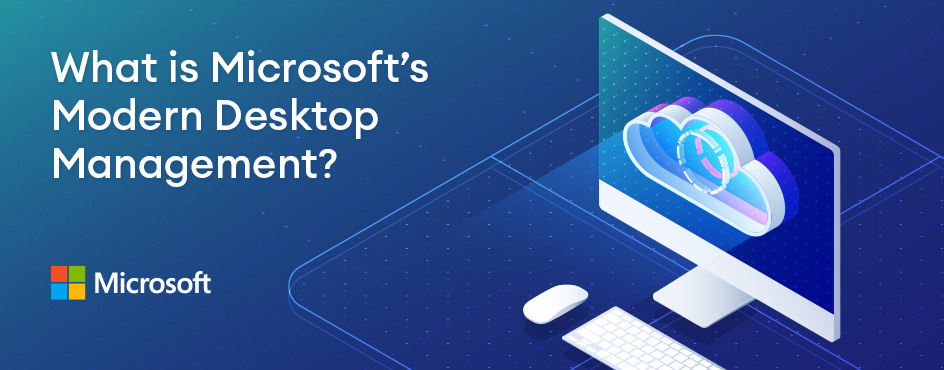
What is Microsoft’s Modern Desktop Management?
Modern desktop management takes the time to manage the PC, automating and streamlining every level of your tech infrastructure so your staff can focus on the work they need to do without interruption. This has been shown to free up at least four free tech maintenance hours each day. This includes increasing battery life of port able devices by 2x, and improving staff efficiency by up to 31%.
What is a cloud-managed PC?
A cloud-managed PC is a PC that is not directly managed by a local administrator, but rather, an administrator running the software and service packages from a cloud-based server. In other words, it’s a great way to decentralizing your IT and ensuring that 24-hour maintenance, care and provisions are all but guaranteed by your managed IT services. They take the busywork, downtime, and compatibility problems out of modern computing, saving your employees and business at large.
What is an MMD device?
An MMD is an approved device used in conjunction with Microsoft Managed Desktop. This could be a desktop computer or laptop. It uses the Microsoft 365 Enterprise infrastructure to ensure constant user support access, immediate security monitoring and response, as well as IT service management made easy.
Not all devices are verified for this kind of software, and so it’s best to check with us if you need your infrastructure developing a little more, or if your devices are ready to be approved ahead of time. While there once was a list of exact devices Microsoft would approve, the 5th of May 2021 saw that restriction loosened a a little more, and provided your device has the correct specifications you should still be able to make use of this functionality.
Frequently Asked Questions
The most frequently asked question we hear regarding this topic is:
What is the Desktop Services Delivery model?
In addition to the services rendered above, we believe that a desktop services delivery model capable of ensuring world-class security and seamless managed desktop experiences is essential. This is especially important to domestic and SOHO end-users. This is provided through a PXE-based thin-client platform for broadband environments that can actually replace a fully integrated PC, while eschewing little and retaining most of the benefits.
Feel free to speak to us regarding any questions you have about this process, and how it can be maximally applied and optimized to and for your firm. We’re here to help, and to field any queries you may have. Despite the accessibility, performance, reliability and peace of mind Managed Desktop Services can offer, it’s always best to be informed first and foremost.