 SOC Services
Why Enterprises Are Switching to Managed Firewall Services



Downtime Draining Your Business? Fix It Before It Costs More
Missed alerts turn into outages, outages turn into lost revenue. ExterNetworks Inc. delivers 24/7 NOC & Help Desk support to keep everything running smoothly.
Get 24/7 IT Support NowWhy Traditional Firewall Management Is Failing
Modern firewalls aren’t simple gatekeepers anymore; they’re complex security hubs managing encrypted traffic, cloud integrations, and dynamic threat intelligence simultaneously.
The operational reality for most IT teams is brutal. A firewall that worked fine three years ago now demands constant tuning, policy updates, and cross-platform visibility to stay effective. Inspection of encrypted traffic alone requires significant computing resources and deep protocol expertise. Add cloud integration spanning hybrid environments, SaaS applications, and distributed workforces, and you’re looking at a configuration surface that grows more complex every quarter.
“The complexity of modern firewall management, which now includes cloud integration and encrypted traffic inspection, has moved beyond the capacity of generalist IT departments.”
Alert fatigue is where overstretched teams start losing ground. When a lean IT department is responsible for managing firewall alerts alongside every other operational priority, critical signals get buried under noise. In practice, teams stop investigating low-severity alerts entirely, and that’s exactly where configuration drift begins. Small, unreviewed policy changes accumulate over months, creating serious security gaps that no single team member can fully account for.
DIY firewall management compounds this risk. Without dedicated expertise and continuous oversight, rule sets become bloated, outdated exceptions remain in place, and threat detection falls behind the pace of modern attacks. The engineers who built the original configuration may have left the company. Documentation is incomplete. And no one has bandwidth for proactive audits. What looked like cost savings on a spreadsheet quietly becomes your organization’s largest unmitigated risk.
This is precisely why IT leaders are evaluating professional firewall oversight as a managed service, not as an outsourcing concession, but as a deliberate operational decision. Understanding exactly what that model entails, and whether it’s the right fit for your environment, starts with defining what managed firewall services actually deliver.
What Is a Managed Firewall and Do You Actually Need One?
A managed firewall is a fully outsourced security service, not just a piece of hardware covering configuration, continuous monitoring, policy management, and proactive maintenance of your network perimeter.
That distinction matters more than most IT teams realize. Buying a next-generation firewall and deploying it is only the starting line. Without ongoing tuning, rule audits, threat intelligence updates, and round-the-clock oversight, even the most sophisticated appliance becomes a liability. Managed services wrap all that operational work around the hardware, transforming a static tool into a living, breathing layer of defense.
The contrast between the two models is stark:
| Feature | DIY / Hardware-Only | Managed Firewall |
|---|---|---|
| Configuration & tuning | Internal team only | Dedicated security engineers |
| 24/7 monitoring | Rarely achievable | Always-on NOC coverage |
| Policy updates | Ad hoc, often delayed | Scheduled and proactive |
| Compliance reporting | Manual effort | Automated and audit-ready |
| Incident response | Reactive, business-hours | Rapid, around the clock |
So who actually needs this? A few triggers consistently signal that the DIY model has run its course:
- Regulatory pressure: HIPAA, PCI-DSS, and SOC 2 frameworks require demonstrable, continuous controls that informal management rarely satisfies.
- No 24/7 internal staff: Threats don’t respect business hours. Managed IT support services provide the 24/7/365 monitoring and rapid incident response that most internal teams structurally cannot maintain.
- Rapid network growth: Expanding cloud environments, SD-WAN deployments, and remote workforces multiply your attack surface faster than internal capacity can track.
- Audit failures or recent incidents: A breach or a failed compliance audit is a clear signal that current controls aren’t working.
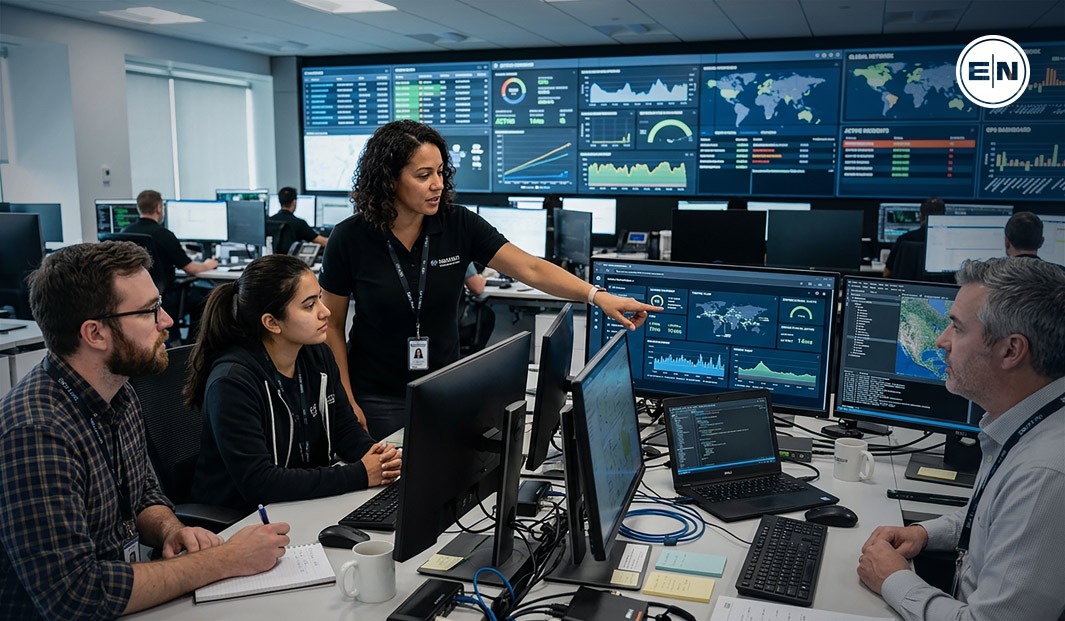
The NOC sits at the center of this model. Rather than waiting for an alert to land in someone’s inbox, a Network Operations Center actively watches traffic patterns, correlates events across your environment, and escalates anomalies before they become outages. That continuous oversight is what separates operational confidence from hopeful monitoring.
The real question isn’t whether a managed firewall sounds appealing; it’s whether your current team has the capacity to consistently deliver that level of discipline. For most organizations, the honest answer points directly to a staffing reality worth examining.
The Hidden Cost of the IT Talent Gap
The cybersecurity skills shortage isn’t a future problem; it’s the operational reality your team is navigating right now. According to the ISACA State of Cybersecurity Report, 62% of organizations report their security teams are understaffed, forcing many IT leaders to stretch generalist engineers across roles that genuinely demand deep specialization. Recruiting a qualified firewall engineer, someone fluent in next-generation firewall features like deep packet inspection, application-layer filtering, and threat intelligence integration, is a months-long effort that often ends in either a failed hire or a compensation demand that blows your headcount budget.
The human cost runs deeper than an open requisition. When you do retain talented security staff, the burden of keeping them current with evolving NGFW platforms, vendor-specific certifications, and a constantly shifting threat landscape falls entirely on your organization. That’s not just a training budget line item; it’s cognitive load that pulls your best engineers away from strategic work and into a perpetual cycle of maintenance and catch-up.
IT managed services address this directly by functioning as a force multiplier for your existing team. Rather than replacing your staff, a managed firewall partner absorbs the operational burden of continuous monitoring, rule set tuning, policy audits, and incident triage, so your internal engineers can redirect their focus toward architecture decisions and business-critical projects. As CGI explains, organizations turn to managed services precisely because they need specialized depth without the overhead of building it in-house. You can explore how co-managed models work in practice to understand how this partnership dynamic scales without creating dependency.
The understaffed reality isn’t a staffing failure; it’s a structural signal that the complexity of modern firewall management has outpaced what any single internal team can sustainably own. That structural shift has real strategic implications, and those implications reach well beyond the NOC floor.

Strategic Benefits: Why Enterprises Are Making the Switch
Moving to managed firewall services isn’t just a security decision; it’s a financial and operational strategy that exchanges unpredictable capital expenditure for measurable, outcome-based value.
The shift from buying boxes to buying outcomes is the defining business case for managed security. When you own the hardware, you own every refresh cycle, every emergency patch, and every 2 a.m. failure that comes with it. When you move to an OPEX model through managed services, that cost becomes predictable as a fixed monthly investment tied directly to service delivery, not to aging appliances.
The operational advantages compound from there. Compliance posture improves significantly because managed firewall providers deliver automated logging, audit-ready reporting, and continuous policy documentation that meet the exact evidence requirements of frameworks like PCI-DSS, HIPAA, and SOC 2. In practice, organizations that previously scrambled to produce firewall logs for annual audits find that managed services convert compliance from a fire drill into a standing capability.
Faster incident response is another measurable outcome. Dedicated NOC engineers, the same ones monitoring your environment around the clock, drive down Mean Time to Respond (MTTR) by eliminating the handoff delays that slow internal teams. The Global Managed Firewall Market is projected to reach $10.12 billion by 2030, growing at a CAGR of 13.1%, signaling that enterprises across industries are already pricing this advantage into their security strategies.
Finally, scalability becomes a planning conversation rather than a staffing crisis. Adding a new location, spinning up a cloud instance, or onboarding an acquired business no longer means hiring ahead of growth. You’re drawing on existing expertise and capacity, the kind of elastic support that co-managed IT services are specifically designed to deliver. That flexibility, it turns out, is exactly where the co-managed model opens up its most compelling possibilities.
Co-Managed IT: The Hybrid Approach to Network Security
Not every enterprise wants to hand over the keys entirely, and they don’t have to. Co-managed IT services offer a middle path: your internal team retains strategic control and policy ownership while a specialized NOC partner handles the continuous, round-the-clock operational work that stretches your staff thin.
Think of it as the “extension of your team” model in practice. Your engineers define the rules, set the priorities, and own the architecture decisions. The managed partner monitors, responds, escalates, and documents, absorbing the alert noise and overnight grunt work that pulls your best people away from initiatives that actually move the business forward. Comparing in-house and managed approaches makes it clear that neither pure model fits every organization; co-management closes that gap.
When you offload the operational burden without surrendering control, you get the strategic bandwidth your team was hired for, not just another tool to babysit.
Here’s how co-management typically works in a firewall context:
- Policy ownership stays internal: your team defines access rules, segmentation requirements, and compliance thresholds.
- 24/7 monitoring transfers to the NOC: the partner watches traffic patterns, flags anomalies, and responds to incidents around the clock.
- Shared dashboards provide full visibility: both teams work from the same data, eliminating the “black box” problem common with fully outsourced models.
- Escalation paths are clearly defined: the NOC resolves what it can autonomously and loops in your team only when a decision requires internal context.
Transparency is a core advantage here. Shared tooling and real-time reporting mean your leadership always knows what’s happening, without waiting for weekly summaries or chasing tickets for status updates. That visibility also meets audit and compliance requirements without creating additional reporting overhead for your internal staff.
The result is a model built on genuine partnership. As you’ll see in the key takeaways ahead, this kind of operational structure doesn’t just solve a staffing problem; it reframes firewall management as a sustainable, scalable business function.
The Bottom Line: Key Takeaways for IT Leaders
Managed firewall services aren’t just a security upgrade; they’re a strategic response to a business environment where complexity, talent shortages, and relentless threats have made DIY infrastructure management genuinely unsustainable.
Firewall complexity is a business risk. Modern network environments spanning cloud workloads, remote endpoints, and hybrid infrastructure create a policy management burden that few internal teams can absorb without cutting corners. Misconfigured rules, delayed patches, and blind spots in traffic analysis aren’t just technical failures; they translate directly into regulatory exposure, breach liability, and operational downtime. What starts as an IT problem becomes a boardroom conversation.
The talent gap doesn’t wait for your hiring timeline. Finding, hiring, and retaining security engineers with firewall expertise is expensive and slow. Proactive, around-the-clock support closes that gap immediately, giving your organization the deep operational expertise it needs without the overhead of building it from scratch. 24/7 monitoring is no longer a differentiator; it’s the baseline expectation for enterprise security, and anything less is a gap attackers will find.
Predictable OPEX transforms how you plan. Replacing unpredictable capital expenditures and emergency remediation costs with a fixed monthly model gives finance and IT leadership aligned visibility into security spending. As Hughes notes, managed firewall services are also foundational to modern security architectures like SASE, meaning this investment scales with where enterprise networking is heading, not just where it’s been.
The right partner makes all of this feel less like an outsourcing decision and more like a natural extension of your existing team, which is exactly what the next step is about.
Choosing the Right Partner for Your Network Evolution
The managed firewall services you gain depend entirely on the quality of the partner you choose, not just the technology they deploy.
Not all providers are built the same. Some hand you a portal login and call it managed. What you actually need is a partner that operates as a genuine extension of your team, one that knows your escalation playbooks, understands your risk tolerance, and takes ownership of outcomes rather than just logging tickets.
Start with these non-negotiables when evaluating a partner:
- Team integration, not vendor distance. Your provider should align with your internal workflows rather than impose a one-size-fits-all process.
- Accountable SLAs with NOC-backed enforcement. Look for clearly defined response times backed by real engineers, not automated acknowledgments.
- Hybrid infrastructure coverage. Your environment spans cloud and on-premises. Your partner needs to manage both without gaps or handoff friction.
- Transparent reporting. Operational health metrics, incident summaries, and proactive risk flags should reach you before problems escalate.
In practice, the difference between a vendor and a true partner becomes clear at 2 a.m., when something breaks. Real experts, not scripts, should be watching your environment and following your specific response protocols. That’s the standard ExterNetworks holds itself to, acting as the proactive operational backbone that keeps your infrastructure running without interruption.
Network complexity isn’t going to simplify itself. But with the right managed NOC partner, it doesn’t have to be your burden. Talk to an expert and reclaim the operational confidence your business depends on.
Related on ExterNetworks Right Now!




Most Recent Posts